LET’S FIND:
some breathing room
connection | healing | clarity
a new sense of safety
At Will Psychology, therapy is a space to deeply know yourself. A place to learn your patterns, your history, and your values. A place to befriend the parts of you that protect and the parts that want healing. Our therapists walk alongside you through life’s challenges and growth moments, help you connect to inner clarity and wisdom, and support you in implementing real, lasting change.
We welcome clients of all gender identities, sexual orientations, races, cultures, abilities, and religious backgrounds. Many of our clients are members of the LGBTQIA+ community, and affirming care is central to how we work.
Like we said on our homepage, it can take time to find a therapist you vibe with. But when you do, therapy becomes a sacred space in which you can be your authentic self. Where you are seen, known, and valued. Where you re-learn what it feels like to be safe in a relationship, and where you explore the attachment wounds that can activate when the relationship deepens. The responsibility and privilege of witnessing you is not something we take lightly. We’re honored to be with you, every session.
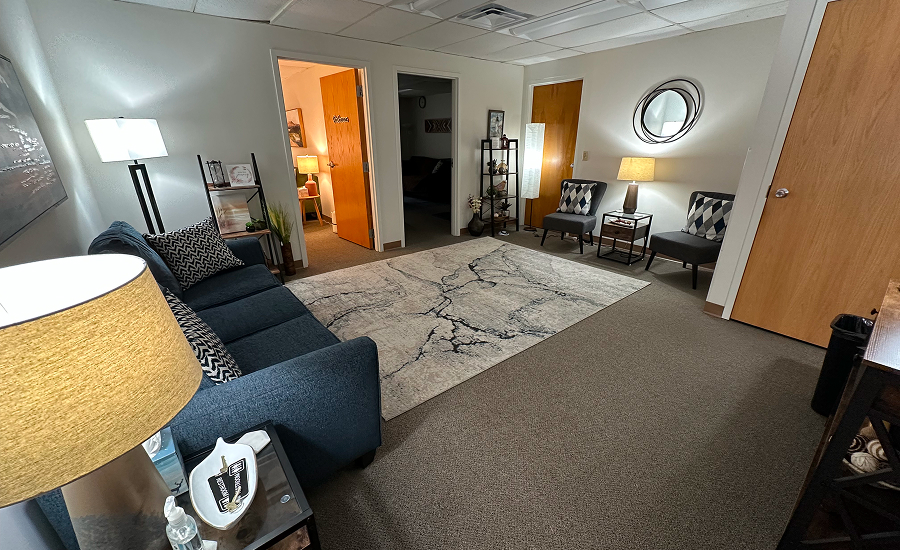
OUR REACH IS WIDE: We offer therapy face-to-face at our office on the northside of Indianapolis, and virtually to clients wherever they are. All clinicians are licensed in Indiana. Dr. Will is also licensed in New York, and Dr. Gonzalez is a PSYPACT member — meaning she can see clients virtually in 40+ states. Check this PSYPACT map to see if your state participates.
If you’re searching for a specific treatment modality, here’s where we get into the technical stuff. If you’re not into that sort of thing, feel free to skip down to our specialties. Or, if you’ve read enough and you’re ready to start therapy, click here to book a consult call.
All our therapists use treatment approaches that are integrative, holistic, and trauma-informed. We don’t view mental health in a vacuum: we know that social, political, and systemic factors shape our daily experience and functioning in real, significant ways.
Keeping that in mind, our therapists have received advanced training in several evidence-based treatment approaches:

Internal Family Systems (IFS) is based on the idea of multiplicity; that is, the belief that humans are not one-dimensional. Instead, we have many “parts” of ourselves that hold beliefs, emotions, and roles. For example, many of us have problem-solving parts, perfectionistic parts, and parts that dissociate, avoid, or distract.
Rather than trying to eliminate unwanted thoughts or behaviors, IFS helps us approach our parts with curiosity and compassion. We befriend the parts of ourselves that protect us from shame, embarrassment, or rejection, and we get to know how they are helping us. We can also support and help the wounded younger parts of us who hold difficult memories of rejection, fear, and trauma. Through IFS, we learn how to connect to our inner wisdom, ultimately gaining increased clarity and self-acceptance. If you’re interested in IFS, reach out for a consultation with Dr. Joanna Will, who has completed Level 1 and Level 2 training in this approach through the IFS Institute.

EMDR is a highly researched, evidence-based therapy originally developed to treat trauma; it has since proven effective for anxiety, depression, and a wide range of distressing experiences. EMDR uses guided bilateral stimulation — often side-to-side eye movements, tapping, or sound — while you briefly hold a difficult memory or experience in mind. This process helps the brain reprocess memories that got “stuck” during overwhelming experiences, so they lose their emotional charge and can be stored as ordinary memories rather than ones that continue to intrude on your present-day life. Unlike some talk therapy approaches, EMDR doesn’t require you to describe your experiences in extensive detail — many clients find that both reassuring and a relief. If you’re interested in EMDR, Madison Wilson is highly experienced in this treatment approach.

ACT is built on a simple but counterintuitive idea: that trying to eliminate uncomfortable thoughts and feelings often makes them stronger, not weaker. Rather than teaching you to challenge or push away difficult inner experiences, ACT helps you change your relationship with them — learning to notice anxiety, self-doubt, or sadness without being hijacked by them, so they no longer dictate your choices or shrink your life. The other half of ACT is about values: getting clear on what genuinely matters to you and building a life that moves toward those things — even when it’s hard and the uncomfortable feelings are still there. ACT is especially useful for anxiety, depression, and the kind of stuck, going-through-the-motions feeling that can come with major life transitions. If you’re looking for ACT therapy, Dr. Sarah Gonzalez incorporates this approach alongside CBT and DBT.

Psychodynamic and relational therapeutic approaches focus on the whole lifespan and early attachment experiences. In psychodynamic therapy, clients explore how early experiences and relationships shaped their development, identity, and current behavioral patterns. Clients use insights from the past to understand defensive responses in the present.
In relational psychotherapy, we view healing through the therapeutic relationship. We explore relationship and communication patterns that you learned early in life, and then we explore how those patterns get experienced in the therapy room. The therapeutic relationship becomes a primary mechanism of change, because when clients develop greater insight into their relational patterns in therapy, they can then generalize new ways of relating in their connections outside of therapy.
Not sure who to work with? Dr. Will is a strong fit if you’re drawn to IFS, exploring queer identity, or working through trauma with a relational approach. Dr. Gonzalez is your expert for CBT, DBT, or ACT, or if you’re navigating major life transitions. Madison is a great fit for clients interested in EMDR, trauma processing, and long-term recovery. If you’re unsure, just reach out — we’ll help you find the right match.
We’re on the northside of Indianapolis, which makes us easily accessible to clients in Marion County (including Broad Ripple, Castleton, Keystone, Meridian-Kessler, and downtown), Hamilton County (Carmel, Noblesville, Fishers), and Boone County (Zionsville, Whitestown, Lebanon).

Are you interested in starting therapy or retaining our forensic services?
Reach out through our contact form so we can see if we’re the right fit.
CONTACT317-204-8540
Across Indiana, New York, and 40+ other states
921 E. 86th St., Suite 206
Indianapolis, IN 46240